
Learn Ukrainian

Привіт як ти? Phrases to say and videos to understand, all free to start. Time on this page counts towards your streak.
DocumentariesGrammar in 9 chapters
Phrase sets
Say it without thinking
9 sets of everyday Ukrainian, with audio for every phrase. Add a set to the app and practise it there.
- Tap “Add phrases to app”Start with set 01.
- Tap Download in the appThe phrases land on your phone, with audio.New phraseset unlockedDownload all phrases to your phone?CancelDownload
- Practise 12 at a timeThe app tests you on 12 phrases at a time and schedules the next time you see each one.12phrases per batch,
spaced repetition
- Click “Check out phrases”The phraseset page opens. Listen to every phrase there.
- Scan the QR code with your phone’s cameraThe Lingophant app opens and asks to download the set. No app yet? The link takes you to the store first.
- Practise 12 at a timeThe app tests you on 12 phrases at a time and schedules the next time you see each one.
01 · Basic Phrases
18 phrases02 · Introductions
20 phrases03 · Useful Reactions
25 phrases6 more sets: Clarifications · Learning Languages · Interests and Preferences …
04 · Clarifications
18 phrases05 · Learning Languages
20 phrases06 · Interests and Preferences
24 phrases07 · Travel Phrases
21 phrases08 · Small Talk
23 phrases09 · Politeness
9 phrasesWhere all 9 sets get you: 178 phrases
Your first 30 phrases are free, then 3 new phrases a day, or Premium for as many as you like. No account needed for your first two sets.
Popular on YouTube · June 2026
Watch with two subtitles
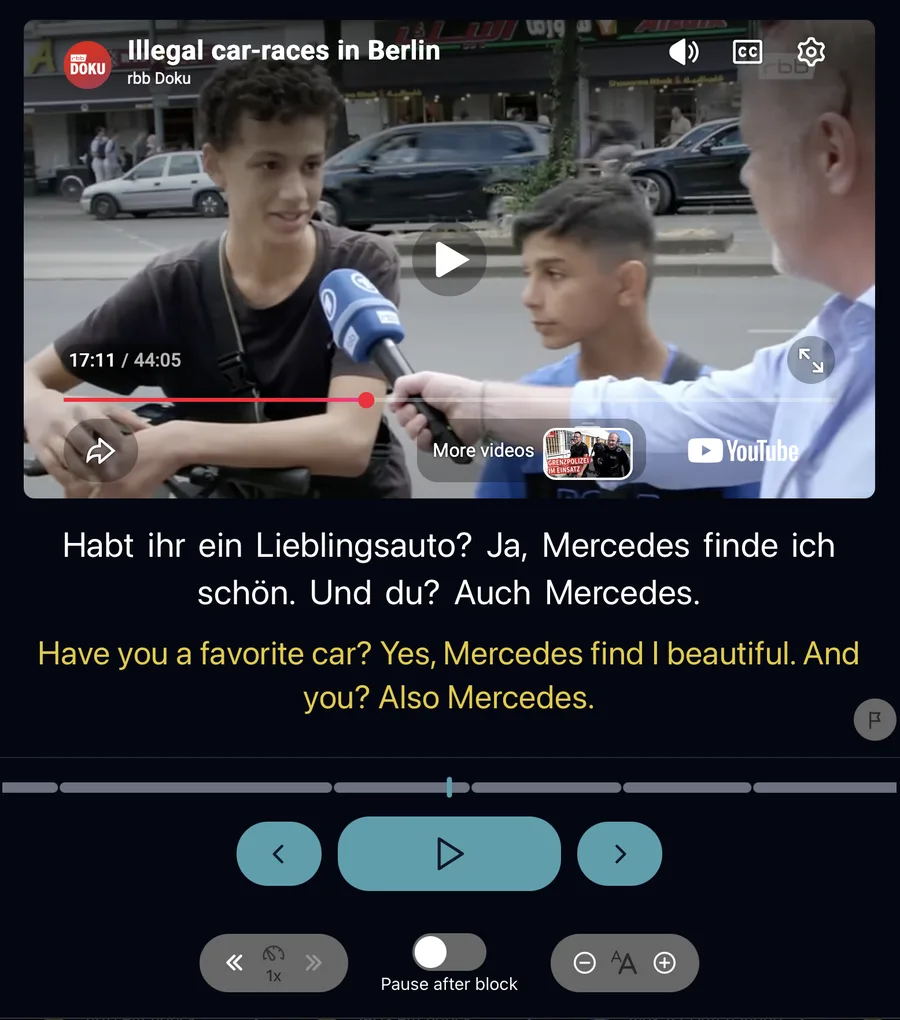
- Ukrainian in white, the translation underneath in yellow
- Tap a word to see what it means
- Slow it down, or pause after each line
 31 minЧЕТВЕР: ОСТАННІЙ МІСТ ЖИТТЯ ДО КРИМУ СПАЛЕНО! Фламінго заважають не лише Путіну і Чебоксарам?Василь Климчук · 27k views
 39 min‼️ТЕРМІНОВО! Від чого затремтіли росіяни? Масована атака на рф!Олександр Мусієнко · 64k views
 64 minСейраш🔥Від кого мовив Абрамович? Удар по ЧАЕС, загрози для ГЕС, Важливе і ГАРНІ НОВИНИ!8 канал. ua · 65k views
 22 min❗️❗️Почалася збройна блокада України. Масові підриви генералів у Москві. Горить газопровід РФМикола Давидюк · 147k views
 23 minВ РФ ПАЛАЄ ВСЕ, ЩО МОЖНА! 600 дронів і ракет по росії?! Росіяни не розуміють, де бензинYanina Sokolova · 154k views
 16 min❗️ЗЛИВ РОЗМОВИ З АБРАМОВИЧЕМ. Хвороба Путіна. 5 умов Кремлю від Європи | Є ПИТАННЯ | Є ПИТАННЯЄ ПИТАННЯ · 183k views
12 more from June 2026
 77 minДурнєв дивиться сторіс ZOМБІ #75Aleksey Durnev · 538k views
 61 minПАСИВНО-АГРЕСИВНЕ ШОУ #8: АНТОНЮК VS БАЙДАК, ФІМА, ТИМОШЕНКО, ЩЕРБИНА, НЕМОНЕЖИНА, КАЧУРАПідпільний Стендап · 211k views
 16 minРЕАЛЬНИЙ строк для топсудді🔥Угода Князєва зі слідством – це зрада чи перемога?BIHUS Info · 73k views
 15 minЗСУ ЗВІЛЬНЯЮТЬ ЦІЛУ ОБЛАСТЬ! Карта бойових дій 10 червня: ЦЕЙ ПРОРИВ ЗАСЕКРЕТИЛИ. Гори тіл на півдніФабрика новин · 144k views
 62 minВацко on air #220: Збірну опустили з небес на землю, де гратиме збірна, ліміт легіонерів в УПЛВацко Live · 135k views
 120 minЯк душили в ШАХТАРІ та ЗБІРНІЙ, напад грабіжників, шалений хейт за Ізраїль, наїзд на Пепа | ЗІНЧЕНКОБомбардир · 196k views
 106 minДИЗЕЛЬ ШОУ 2026 💙 184 ВИПУСК 💛💐 ВЕСНЯНА ПРЕМ'ЄРА 🌷 від 05.06.2026Дизель Студио · 277k views
 12 min😱 ДО КІНЦЯ! УКРАЇНА — АЗЕРБАЙДЖАН | ФІНАЛ | Євро з мініфутболу 2026Київстар ТБ Спорт · 294k views
 52 minСеріал Підміна 12 серія | СЕРІАЛИ СТБ | УКРАЇНСЬКІ СЕРІАЛИ | МЕЛОДРАМИСТБ. Серіал · 274k views
 45 minПРЕМ'ЄРА! Супер серіал! Парочка слідчих 2. 1 серіяТелеканал 1+1 · 144k views
 16 miniOS 27 Beta 1 – Apple ВРЯТУВАЛА СТАРІ iPhone!Канал Лучкова · 33k views
 47 minУкраїна (не) помириться з Польщею: що далі? Зеленський, герої УПА, вимоги | Свобода LiveРадіо Свобода · 73k views
In the app, your first 30 minutes of listening are free. listening.lingophant.com is free in any browser.
Longer listening
Documentaries
Clear, well-edited Ukrainian, for when a short clip starts to feel easy.
24 Канал8.95m subscribers · 10 videos
Вітаємо на YouTube 24 Каналу!
 15 min😮У ЦІ ГОДИНИ! Ви НЕ ПОВІРИТЕ, кого ЗАТРИМАЛИ у Києві. ГУЧНА ОПЕРАЦІЯ: ось хто ГОТУВАВ ЗАМАХ на ЮСОВА249k views
 19 min😮Почуйте, що СТАЛОСЬ під час ПОЛЬОТУ Зеленського до Британії! Київ ВРАЗИВ. Тепер ЦЕ У ВСІХ НА СЛУХУ238k views
 18 min🔥Росіяни ВЕРЕЩАТЬ про КАТАСТРОФУ в Криму! РЕАКЦІЯ підірвала інтернет. На пляжах ПЕКЛО, бензину НЕМАЄ198k views
7 more from 24 Канал
 34 min⚡Польща ВИДАЛА Зеленському УЛЬТИМАТУМ! Сікорський ЗІРВАВСЯ. Негайна РЕАКЦІЯ Буданова74k views
 16 min⚡️ЕКСТРЕНО! НІКОЛ ПАШИНЯН виграв вибори у Вірменії. ПЕРША РЕАКЦІЯ рве мережу. Путін ЛЮТУЄ71k views
 16 min😱ОЦЕ НОВИНИ! Сімейка Трампа ОБДУРИЛА СВІТ. В мережу злили БРУДНУ СХЕМУ. Тепер НЕ ВІДМИЮТЬСЯ59k views
 20 min😲Оце ПОВОРОТ! Лукашенко НАГОВОРИВ ТАКЕ про армію Путіна, що всі АХНУЛИ. Ось, що сказав про вояк РФ50k views
 13 min⚡УВАГА! Ви НЕ ПОВІРИТЕ, кого СХОПИЛИ СПЕЦСЛУЖБИ! Гучне затримання СБУ. Ось що зрадниця робила38k views
 20 min😮Трампа ОСВИСТАЛИ тисячі фанатів! МІЛЬЙОНИ БАЧИЛИ цю ганьбу: матч вибухнув ПРОТЕСТОМ39k views
 13 min😳Почалось! Ось що АБРАМОВИЧ розповів ЗЕЛЕНСЬКОМУ. На РФ несеться БУНТ ЕЛІТ проти Путіна. Слухайте38k views
Антон Птушкін5.43m subscribers · 1 video

14 more channels: Радіо Свобода · Українська правда · Бутусов Плюс …
Радіо Свобода1.79m subscribers · 2 videos
Радіо Свобода бачить свою місію у просуванні демократичних цінностей та інститутів шляхом звернення до аудиторії тих країн, в яких свобода…

Українська правда1.37m subscribers · 1 video
Українська правда – незалежне інтернет-видання, яке висвітлює суспільно-політичні та економічні події в Україні.

Бутусов Плюс1.30m subscribers · 9 videos
Юрій Бутусов, головний редактор Цензор.НЕТ
 62 min67 ДІБ В ОТОЧЕННІ: БИТВА ЗА ОПОРНИЙ ПУНКТ «ПІНЧЕР» (+eng audio)2.01m views
 21 minПІДРИВ ГЕНІЧЕСЬКОГО МОСТУ. СВІДЧЕННЯ ОЧЕВИДЦІВ.650k views
 54 minКРИНКИ. ДОКУМЕНТАЛЬНИЙ ФІЛЬМ ПРО БИТВУ ЗА ЛІВИЙ БЕРЕГ | ФІЛЬМ ІРИНИ САМПАН723k views
6 more from Бутусов Плюс
 69 minСВІДЧЕННЯ ВЦІЛІЛИХ: РЕКОНСТРУКЦІЯ ПОДІЙ ТА РОЗСЛІДУВАННЯ МАСОВОГО ВБИВСТВА В ОЛЕНІВЦІ523k views
 24 min19-РІЧНИЙ ІРЛАНДЕЦЬ З ДУБЛІНА УРАЗИВ 6 РОСІЙСЬКИХ ГАРМАТ ЗА ОДИН ДЕНЬ ПІД АВДІЇВКОЮ1.35m views
 34 minОСТАННЄ ІНТЕРВ'Ю МЕРА ОЛЕКСАНДРА ЦЕБРІЯ.877k views
 19 minСАМОТУЖКИ ВЗЯВ У ПОЛОН 6 РОСІЙСЬКИХ ШТУРМОВИКІВ. БРИГАДА «РУБІЖ» НГУ. ДЕНИС "МЕЛ" МЕЛЬНИЧУК.424k views
 14 minРЕПОРТАЖ З СУДЖІ: ЗНИЩЕНІ ОПОРНІ ПУНКТИ ЗС РФ, БУДИНКИ ФСБ, МВД, ВІЙСЬККОМАТ1.52m views
 20 min"ВСІ РАЗОМ ПОЧАЛИ КОПАТИ ТРАНШЕЮ ПРОСТО В БУДИНКУ" – "ТИГР" З КОЛУМБІЇ, 47 БРИГАДА (УКР СУБТИТРИ)29k views
BIHUS Info1.20m subscribers · 10 videos
Офіційний канал проєкту Bihus.Info.
 79 minПрослушка головної банди Києва: розпил столиці в сумах і деталях1.03m views
 38 minУкрзалізниця vs перекупи: хто «загрібає» наші квитки414k views
 30 minВійськові зачекають 🤬 Як посадовці скуповують житло через “дірки” в єОселі424k views
7 more from BIHUS Info
 25 minХто контролює видобуток стратегічних ресурсів в Україні: огляд власників спецдозволів на надра305k views
 43 minРодинні секрети голови Закарпаття: бізнес з Аваковим, звʼязки з контрабандистом та приховані статки341k views
 34 minСтати «музикантом» за $5000: схема виїзду на «гастролі» з Петром Чорним188k views
 15 minЩо буде зі СВІТЛОМ і ТЕПЛОМ? Реальний стан енергетики, атаки росіян та чи близько катастрофа185k views
 25 minРозпил Карпат на таємних зустрічах: як старі схематозники віджимають гори і полонини 🤬199k views
 44 minУжгород корупційний: імперія рідні мера, шалена забудова і бізнес з оточенням Корбана191k views
 22 minСхема на 10 мільйонів: як ексдепутат дурив шведів і заробляв на біженцях 🤬185k views
Суспільне Новини1.12m subscribers · 1 video
Суспільне Новини – YouTube-канал про усі новини України та світу, а також – ексклюзивні інтерв'ю, репортажі, розслідування, прямі…

hromadske1.11m subscribers · 8 videos
hromadske — це незалежний проєкт українських журналістів. Ми розповідаємо цікаво й про найважливіше.
 11 min«Усе кидаємо — і біжимо». Як село біля кордону з Білоруссю першим зустрічає звільнених українців80k views
 31 min«Коза — від сатани, а вівці — божі сотворіння». Як гуцули проводжають овець на полонину / hromadske14k views
 37 minКостянтинівка: дорога до ключового міста Донеччини / hromadske122k views
5 more from hromadske
 26 min«Усі інфільтруються». Як штурмовики беруть під контроль сіру зону довкола Гуляйполя / hromadske50k views
 20 min«Перед відправленням у рейс, я читаю “Отче наш”». Залізниця під обстрілом / hromadske27k views
 23 min«Шкода, що Мельника не в рідному селі поховали». До України привезли прах провідника ОУН / hromadske31k views
 15 min«Танцювати будете?» — «У мене нога поломана». Гаївки на протезах із ветеранами7k views
 34 min«На звук сирен». Фільм про тих, хто першими прибувають на місця ударів / hromadske12k views
Телебачення Торонто972k subscribers · 1 video
Телебачення Торонто – незалежна транснаціональна мультимедійна корпорація

Історія Без Міфів937k subscribers · 8 videos
“Історія Без Міфів” – це популярний канал про минуле України та світу без прикрас і фальсифікацій. Експертами наших програм є фахові…
 34 min1775: як російська імперія ліквідувала Запорозьку Січ // Історія без міфів156k views
 136 minВолодимир Мономах – воїн і державник // Історична постать192k views
 32 minЮліан БАЧИНСЬКИЙ – перший ідеолог незалежної соборної України // Історична постать91k views
5 more from Історія Без Міфів
 26 minМавпа на троні: Михайло Вишневецький – невдалий вибір Речі Посполитої // Історична постать81k views
 30 min«Гра престолів» московського улусу Орди // Історія без міфів120k views
 52 minБитва за Берлін: останні дні Гітлера // Історія без міфів291k views
 30 minФормула смерті: хімічна зброя в Першій світовій // Історія без міфів68k views
 23 minТрафальгарська битва: чому НАПОЛЕОН не завоював БРИТАНІЮ? // Історія без міфів74k views
СВІТ НАВИВОРІТ878k subscribers · 1 video
Українська пізнавальна телепрограма про подорожі до найекзотичніших країн світу. Авторський проєкт журналіста і мандрівника Дмитра Комарова.

РЕАЛЬНА ІСТОРІЯ838k subscribers · 9 videos
Проєкт «Реальна історія» з Акімом Галімовим розкриває маловідому історію та правдиві факти, як розвивалася Україна в різні епохи.
 37 minВся історія України за 30 хвилин. «Реальна історія» з Акімом Галімовим821k views
 46 minКНЯГИНЯ ОЛЬГА. Реальна історія1.02m views
 30 minРеальна історія Підгорецького замку: Українські палаци. Золота доба (ENG SUB)959k views
6 more from РЕАЛЬНА ІСТОРІЯ
 33 minРозбиваємо міф про триєдиний народ з Віталієм Дрібницею795k views
 79 minВся правда про український Південь!1.49m views
 48 minЩо приховує реальна історія Галичини?672k views
 51 minКоли ми себе усвідомили як українці і як це сталося? (Napisy PL)308k views
 77 minЩо НАСПРАВДІ сталося між поляками та українцями? (Napisy PL)3.54m views
 31 minКозацький палац у Сокиринцях: Українські палаци. Золота доба (ENG SUBS)305k views
PRESSING711k subscribers · 10 videos
✋Привіт! Мене звуть Сергій Пейчев. Тут я буду знімати круті репортажі, пресувати гостей, піднімати теми, від яких у вас збільшиться тиск.
 70 minТУ-160: ХТО ПРОДАВ НАЙДОРОЖЧІ ЛІТАКИ РОСІЇ/НАПАД НА УКРАЇНУ У 2003/МАХІНАЦІЇ ПРЕЗИДЕНТІВ/ENG SUB3.64m views
 53 minЩО НА ДНІ КАХОВСЬКОГО МОРЯ?/ЗНАЙШЛИ ЧОВЕН КОЗАКІВ/ЗА СКІЛЬКИ ПРОДАЮТЬ РЕЛІКВІЇ НА ЧОРНОМУ РИНКУ3.51m views
 59 minСАМ НА АЗОВСТАЛІ/200 КМ ПІШКИ ПО ТЕРИТОРІЇ ВОРОГА/ЯК ВИЖИВ І НЕ ПІШОВ У ПОЛОН/"СХІД"3.30m views
7 more from PRESSING
 78 minТАЄМНЕ ПІДЗЕМНЕ МІСТО/НАРКОТИКИ ДЛЯ 3 РЕЙХУ/ГІТЛЕРА РОЗСТРІЛЯЛИ У ВІННИЦІ?/ ВЕРВОЛЬФ1.67m views
 83 minОДЕСЬКІ КАТАКОМБИ – ТИСЯЧІ КІЛОМЕТРІВ ПІД ЗЕМЛЕЮ/КРИМІНАЛ, УКРАЇНСЬКІ ПІРАТИ, ПАРТИЗАНИ-ЛЮДОЖЕРИ1.25m views
 59 minПРОТИЯДЕРНИЙ БУНКЕР ДЛЯ ЕЛІТ/УКРАЇНСЬКА МАШИНА ЧАСУ/ШТУЧНЕ МОРЕ У КАРПАТАХ/СЕКРЕТНІ ОБ’ЄКТИ СРСР1.07m views
 53 minВСЕРЕДИНІ АЕС/КНОПКА, ЯКА «ПІДІРВАЛА» ЧОРНОБИЛЬ/УКРАЇНА КУПУЄ РОСІЙСЬКІ РЕАКТОРИ?786k views
 71 minМИ ВИННІ У ВОЛИНСЬКІЙ ТРАГЕДІЇ?/НІМЕЦЬ ПЕРЕЙШОВ В УПА/ПОЛЬЩА ЗАКОПАЛА МІЛЬЯРДИ В ЗЕМЛЮ/(Napisy PL)664k views
 39 minСОЛДАТ КНДР: ВТЕЧА/ВІЙНА В УКРАЇНІ/10 РОКІВ ШПИГУВАВ У ПІВНІЧНІЙ КОРЕЇ/ТОРГУЮТЬ НАРКОТИКАМИ І ЗБРОЄЮ1.91m views
 64 minСКІЛЬКИ «КОШТУЄ» УКРАЇНА?/БРЕХНЯ ПРО 15 ТРЛН/РЕСУРС, ЯКИЙ ЗМІНИТЬ ВСЕ/ГАЗУ БІЛЬШЕ НІЖ В НОРВЕГІЇ1.14m views
Слідство.Інфо | Розслідування, репортажі, викриття555k subscribers · 9 videos
«Слідство.Інфо» — це команда незалежних журналістів. Ми викриваємо корупцію та зловживання українських посадовців, знімаємо…
 56 minДержавні діти: що сталося з дітьми-сиротами під час евакуації до Туреччини. Фільм-розслідування +ENG116k views
 23 minЯк Росія в окупації вербує українських чоловіків на війну з українцями95k views
 19 min«Думав, українців не зустріну»: узбеки, таджики та шріланкійці про найманство в російській армії149k views
6 more from Слідство.Інфо | Розслідування, репортажі, викриття
 33 min«Я його з автомата добив. Машину підпалив». Розстріляний: історія чоловіка, який проривався додому37k views
 14 minКрадене зерно: як данська компанія працює в інтересах окупантів + ENG8k views
 19 minЗнайшли СІЗО, де загинула Рощина: невідомі раніше факти про смерть журналістки44k views
 17 min«Тебе свої заб’ють ногами»: як ФСБ допитує українських втікачів у Придністров’ї +ENG25k views
 47 minВійна за Костянтинівку: як наземні дрони відбивають російські штурми і рятують поранених81k views
 14 min«Щоб не поховали, як невідомого»: повернення тисячі загиблих військових +ENG154k views
The ДОКУМЕНТАЛІСТ384k subscribers · 10 videos
Це канал про історію. Можливо, історію не просту і не завжди приємну, але втім – правдиву і безкомпромісну.
 23 minВід Кочубея до Киви. Історія українських зрад та запроданства | The Документаліст618k views
 24 minРечі, без яких не уявити буремні 90-ті | The Документаліст347k views
 25 minЯк Медведчук «захищав» Василя Стуса | The Документаліст401k views
7 more from The ДОКУМЕНТАЛІСТ
 26 minХрущовки – символ епохи | The Документаліст347k views
 35 minБулінг на екрані: образ українця в совєтському та російському кіно | The Документаліст307k views
 28 minЗимова ганьба Сталіна. Як СССР втратив 100 000 солдатів за 3 місяці у Фінляндії | The Документаліст558k views
 24 minПридністров’я – російський анклав в тілі Молдови | The Документаліст512k views
 16 minЯк після війни Сталін зачищав скалічених фронтовиків | The Документаліст613k views
 33 minПіраміда брехні. Фінансова піраміда МММ Мавроді – від зародження до краху | The Документаліст493k views
 26 minЯк телевізор формував з українців совєтських людей | The Документаліст289k views
Суспільне Документалістика156k subscribers · 8 videos
Суспільне Документалістика – YouTube-канал, де ви знайдете найкращі документальні фільми й серіали Суспільного про українську історію та…
 71 min«Українське прокляття: будівничі й руйнівники імперії» | Документальний цикл «Остання війна»263k views
 75 minЯк «австрійський аристократ» став духовним лідером українців | «Шептицький. Між війною та вірою»101k views
 79 minВертеп, який злякав КДБ. Як українців переслідували за Різдво? | «Репресована коляда»71k views
5 more from Суспільне Документалістика
 53 minІсторія затоплених сіл | «Хвилі Бакоти» | Документальний фільм34k views
 55 min«Довженко. Великий компроміс» — як режисер маневрував між власними ідеалами та тоталітарним режимом10k views
 50 minЯк українська армія здобула перший бойовий досвід у 90-х? | Українські миротворці. Балкани31k views
 9 minЯк ветеран Олександр Ткачук створив власний бренд ВИШИВАНОК і просуває українську культуру у світі19k views
 82 min«Ізоляція» – як арт-центр став катівнею для українців в Донецьку | Документальний фільм11k views
Grammar summaries
Noticing patterns?
You’ll notice these patterns while practising phrases. Each chapter is a short explanation and the best videos we found.
A1Noun Gender & Endings
Every Ukrainian noun belongs to one of three genders — masculine, feminine, or neuter — and the ending of the noun in its base (nominative) form is your clearest clue. Masculine nouns typically end in a consonant (брат, стіл) or -о/-е in a handful of cases; feminine nouns usually end in -а or -я (мама, земля); neuter nouns end in -о or -е (вікно, море). Gender is not just a label — it controls the form of every adjective, pronoun, and verb that agrees with that noun, so recognising gender from the ending is a foundational skill you will use in every sentence.
The most effective technique is to always learn a new noun together with its gender marker — treat «стіл (м.)» as one chunk rather than memorising the word alone. In the app, pay attention to how adjectives next to nouns change their ending: «великий стіл» vs «велика мама» vs «велике вікно». Once you internalise gender, you will immediately understand and produce correct adjective-noun pairs, which makes your speech sound natural and helps you decode written Ukrainian far more quickly.
- Genders of noun: grammar lesson | Learn and practice Ukrainian · Ukrainian Learner
- Gender of Ukrainian Nouns | Basic Ukrainian Grammar · Learn Ukrainian with Vakulenko
- IRREGULAR ENDINGS OF THE NOUNS IN THE UKRAINIAN · Ukrainian grammar
A2The Six Grammatical Cases
Ukrainian nouns, pronouns, and adjectives change their endings depending on their role in the sentence — this system is called grammatical case. There are six cases: Nominative (subject — хто? що?), Accusative (direct object — кого? що?), Genitive (possession or absence — кого? чого?), Dative (indirect object — кому? чому?), Instrumental (accompaniment or means — ким? чим?), and Locative (location, always with a preposition — на, в, при). For example, «книга» (nominative) becomes «книгу» (accusative) when it is the object of an action: «Я читаю книгу» (I am reading a book).
Rather than trying to memorise all six case tables at once, focus on the two or three cases that appear most in phrases you already use: start with Nominative and Accusative, then add Genitive (needed for «немає» — there is no…) and Locative (needed for talking about place). A practical trick is to anchor each case to one high-frequency phrase — «Я бачу книгу» for Accusative, «Вдома немає хліба» for Genitive, «Я в магазині» for Locative. Mastering cases gives you the ability to express who does what to whom, where things are, and whose things they are — essentially the backbone of any real conversation.
- The Fastest Way to Learn Cases in Slavic Languages · untrialser
- Lesson 9A. Locative case · Olga Reznikova
A1Present-Tense Verb Conjugation
Ukrainian verbs conjugate — they change ending based on the person (I, you, he/she, we, you-plural, they) and belong to one of two conjugation patterns. First-conjugation verbs (infinitive often ending in -ати/-яти) follow endings like -ю, -єш, -є, -ємо, -єте, -ють (e.g., читати → я читаю, ти читаєш). Second-conjugation verbs (infinitive often in -ити/-іти) follow -ю/-у, -иш, -ить, -имо, -ите, -ять (e.g., говорити → я говорю, ти говориш). The infinitive ending is not a perfect guide — there are irregulars — but it predicts the right class the majority of the time.
The most efficient learning method is to take five very common verbs (бути, мати, говорити, робити, іти) and drill all six persons until they feel automatic, then use those as templates when you meet new verbs. In the app, listen for how the verb ending shifts when the subject pronoun changes, and try to predict the ending before you hear it. Once you command present-tense conjugation, you can talk about habits, ongoing actions, and states — «Я розумію», «Вона працює», «Ми живемо тут» — giving you the engine to construct your own original sentences in real time.
- Ukrainian Present Tense. The First Conjugation Group. · Speak Ukrainian
- Learn Ukrainian. Present tense. Conjugation verbs · Olga Reznikova
- Ukrainian Present Tense. The Second Conjugation Group. · Speak Ukrainian
B1Verb Aspect: Perfective vs. Imperfective
Ukrainian verbs come in pairs defined by aspect — imperfective verbs describe ongoing, repeated, or incomplete actions, while perfective verbs describe completed, one-time, or result-focused actions. Most verbs exist as a pair: «читати» (imperfective — to be reading / to read habitually) vs «прочитати» (perfective — to finish reading). The aspect you choose changes the meaning significantly: «Я писав листа» means I was writing a letter (process), while «Я написав листа» means I wrote the letter (and it is done). Aspect affects past tense most visibly, but also governs which form you use in the future and with certain imperatives.
A reliable learning strategy is to always learn new verbs in pairs and tag them with a mental image: the imperfective as a film (action in progress) and the perfective as a photograph (completed result). When you encounter a verb in the app, ask yourself whether the speaker is describing a process or a completed fact — that question will almost always tell you which aspect to expect. Internalising aspect allows you to tell stories and recount events accurately in the past tense, make specific future plans («Я прочитаю цю книгу» — I will read this book through), and understand the subtle difference between a request for a single action vs. a habitual one.
- Perfective and Imperfective: Verb Aspects in Ukrainian · Let's Learn Ukrainian
- PERFECTIVE VERBS vs IMPERFECTIVE VERBS IN THE UKRAINIAN LANGUAGE- PART 1 · Ukrainian grammar
- Lesson 8. UKRAINIAN: Perfective and Imperfective verbs. Prefixes and their meanings · Red Purple Ukrainian
A2Personal Pronouns & Their Case Forms
Ukrainian personal pronouns (я, ти, він/вона/воно, ми, ви, вони) change form across all six cases, just like nouns. These shifted forms are extremely high-frequency: «мене» (me/of me), «мені» (to me), «мною» (with me), «йому» (to him), «їх» (them/of them), and so on. Importantly, after prepositions the third-person pronouns (він, вона, вони) add an initial «н-»: «у нього», «з нею», «для них». Missing this «н-» is one of the most common mistakes learners make.
Because pronoun case forms are short and common, they are worth memorising as whole chunks rather than deriving them each time — your brain will eventually retrieve «мені подобається» (I like / it pleases me) as a single unit. A helpful tip is to group the forms by case column on a small reference card and read authentic dialogues in the app watching specifically for pronouns to reinforce each form in context. Once you know pronoun case forms, you can handle almost any conversational exchange involving people — «Я тебе бачу», «Він дав їй квіти», «Ми з ними підемо» — without having to pause and calculate.
- PERSONAL PRONOUNS IN THE ACCUSATIVE CASE · Ukrainian grammar
- Understanding Occupations and Personal Pronouns in Ukrainian for beginners · Ask-Ukie
A2Past Tense & Gender Agreement
In Ukrainian the past tense is formed by removing the infinitive ending and adding -в (masculine), -ла (feminine), -ло (neuter), or -ли (plural) — there is no person distinction, only gender and number. So «він читав» (he was reading/read), «вона читала» (she read), «вони читали» (they read). The gender of the past-tense verb agrees with the subject, which means if you know your noun genders you can decode and produce past-tense sentences immediately. Irregular verbs like «іти» (to go) have suppletive past forms (ішов, ішла, ішли) that must be learnt separately.
Because the ending set is small — just -в/-ла/-ло/-ли — this is one of the fastest tenses to learn productively. Practise by taking sentences from the app and mentally swapping the subject between «він», «вона», and «вони», noting how the verb ending shifts each time. Gaining control of the past tense unlocks storytelling: you can recount what happened, talk about your day, share experiences, and understand when others tell stories, which covers a huge portion of everyday conversation.
- Lesson of Ukrainian language. Past tense · Olga Reznikova
B1Future Tense: Simple & Compound
Ukrainian has two ways to express the future. For perfective verbs, you use the present-tense conjugation endings, which automatically carries a future meaning: «Я напишу» (I will write — completed). For imperfective verbs, you build a compound future with the auxiliary «буду/будеш/буде…» plus the imperfective infinitive: «Я буду писати» (I will be writing / I will write — ongoing or repeated). Choosing the wrong form can make your sentence sound like you are describing the present, so linking aspect and future tense together is essential.
A practical memory anchor is: «perfective verb + present endings = future fact; буду + imperfective = future process.» When you encounter future-tense sentences in the app, identify which type is being used and why — is the speaker describing a planned result or a repeated future activity? This habit of noticing will make the pattern automatic. Mastering the future tense lets you make plans, promises, offers, and predictions — «Я куплю квитки», «Ми будемо чекати» — all of which are indispensable for practical daily interaction.
- Verb Conjugation: Future Tense #Ukrainian · Let's Learn Ukrainian
- Verb БУТИ (to be) in Ukrainian: Grammar Lesson · Ukrainian Learner
A2Adjective Agreement in Gender, Number & Case
Ukrainian adjectives agree with the nouns they modify in gender, number, and case — which means the adjective ending changes every time the noun's role or gender changes. A masculine adjective in nominative uses -ий/-ій (великий стіл), feminine uses -а/-я (велика кімната), neuter uses -е/-є (велике місто), and plural uses -і (великі столи). As the noun shifts into different cases, the adjective ending shifts with it: «у великому місті» (in the big city — locative). The adjective always mirrors whatever the noun is doing, so learning the noun's case simultaneously teaches you the adjective form.
The best way to internalise agreement is to practise whole noun phrases rather than adjectives in isolation — always say «красива дівчина» as a unit, not «красива + дівчина» as two separate words. In the app, listen for the adjective-noun pair as a chunk, and over time you will develop an ear for when an ending sounds «off». Once adjective agreement feels natural, your descriptions become rich and accurate — you can say «У неї довге чорне волосся» (She has long black hair) or «Він живе у старому будинку» (He lives in an old building) with confidence.
- Ukrainian Adjectives. Agreement with the Ukrainian nouns. · Speak Ukrainian
B1Prepositions & the Cases They Govern
Every Ukrainian preposition requires the noun that follows it to take a specific case, and many prepositions can govern different cases depending on meaning. For example, «в/у» with the Locative means location («Я в школі» — I am at school), but «в/у» with the Accusative means direction («Я йду в школу» — I am going to school). Other key pairs: «на» (on/at with Locative vs. onto with Accusative), «за» (behind/during with various cases). Common single-case prepositions include «до» + Genitive (to, until), «з» + Instrumental (with), «для» + Genitive (for).
The most efficient approach is to group prepositions by the case they most commonly take and learn one fixed phrase per group as an anchor: «без молока» (without milk — Genitive), «з другом» (with a friend — Instrumental), «на столі» (on the table — Locative). Whenever you see a preposition in the app, make a habit of noticing which case follows it. Fluency with prepositions and their cases dramatically expands your ability to talk about location, direction, time, reason, and relationships between people and objects — in other words, nearly every descriptive sentence you will ever want to say.