
Learn Georgian 🧀
Gamarjoba, rogor khar? 👋 ! Here’s our curated content for training your passive understanding of the language.
Gamarjoba 👋! Here’s our curated content for training your passive understanding of the language.
Instructions (tap to open)

Explore everything from phrases, grammar, to listening training. Useful for complete beginners through to intermediate speakers.
⏰ Time spent here also counts towards your streak.
Language competency consists of active vocabulary, but also passive vocabulary and natural pattern recognition. Train essential listening skills, understand grammar and the unique Georgian verb system.
The Basic Phrases help you start and stay in the language. Ira’s Listening-Reading videos introduce you to intensive training of your listening skills.
What makes Lingophant unique is that you can create your 100% personalised vocabulary from conversations. 45 minutes per week with a friend or a teacher is already enough input for a constant stream of engaging sentences to practice between lessons.
📔 Basic Phrases
These phrases are the perfect point of departure for serious learners. They help you stay in the language, without needing to switch to English. And you internalize patterns.
Unlock them one-by-one in the app, and memorize them from the “Practice” tab.
This is just to get you started. For personalized phrases, we recommend sessions of 45 minutes with a native speaker.
- Know 300 phrases and you can make jokes and impress people
- Know 600 phrases and you can hold basic conversations
- Know 1000 phrases and you start communicating effortlessly
And because of working with audio, you’ll get compliments on your pronunciation a lot. We promise!
🧑🏫 A lazy guide to the alphabet (with tricks to remember each letter)
Normally you’d spend the first 2–3 weeks with a teacher learning the script. With us you watch this video twice and start practising phrases on the app straight away. Every letter has a hint to help you remember it.
If you prefer learning from a book, here is the book most teachers use. But take a look at our video first.
All Letters
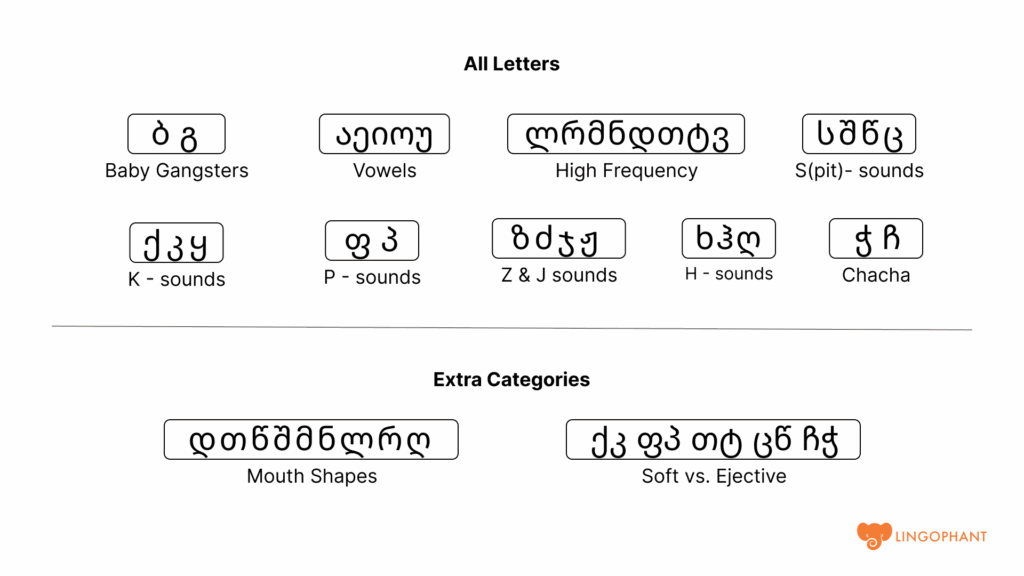
Two overviews to help you:
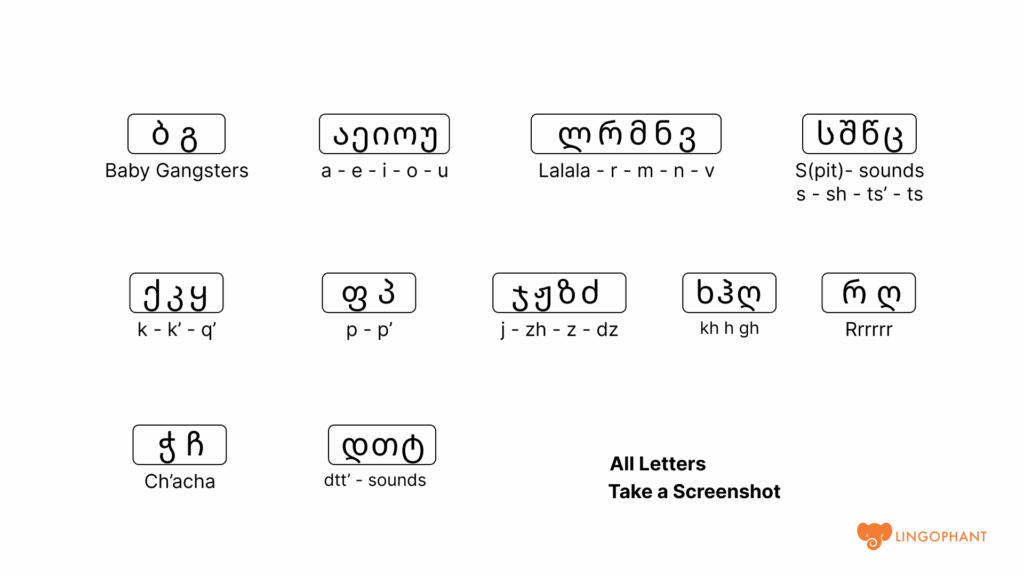
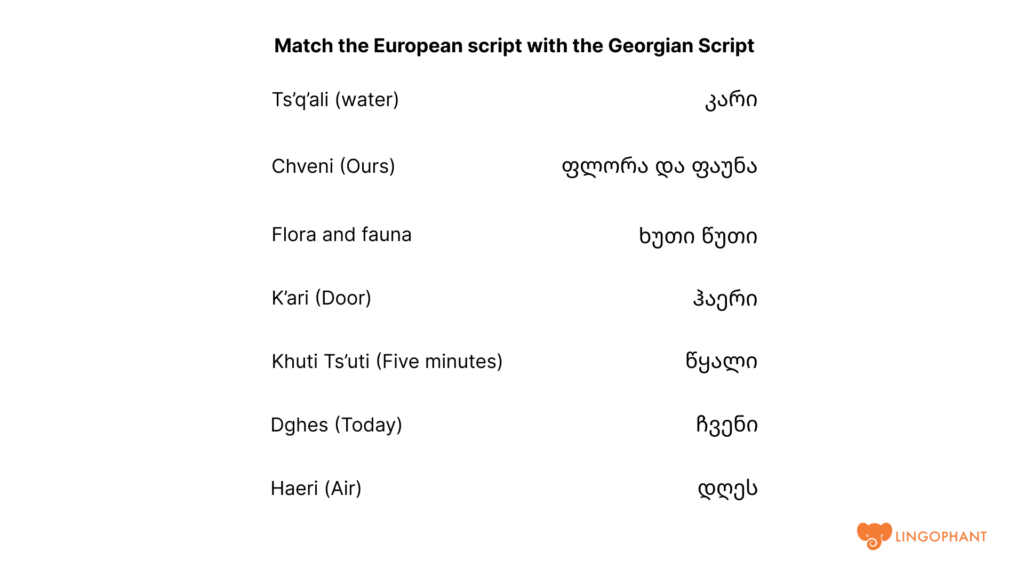
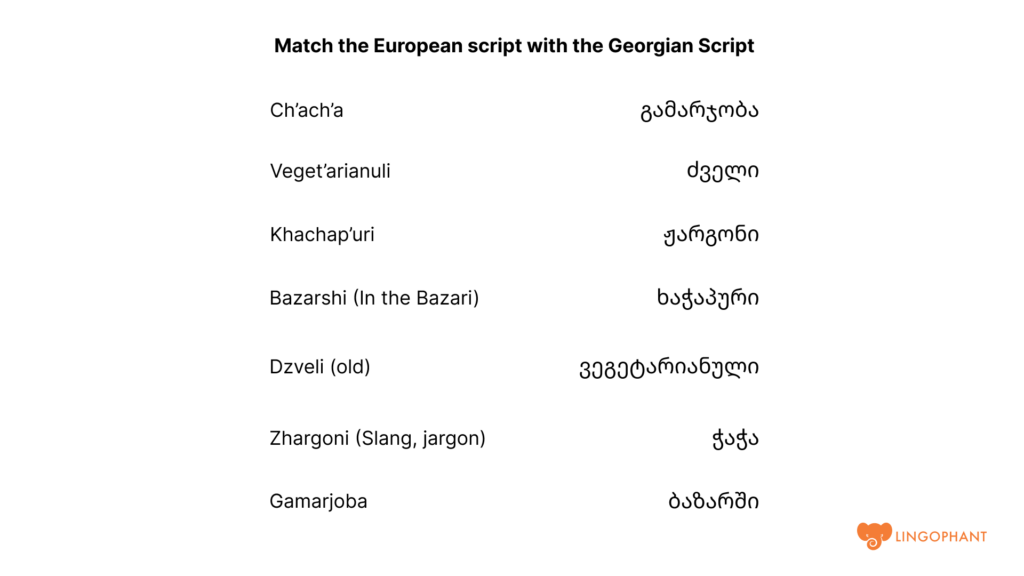
Practice hearing and distinguishing the sounds
Recognising ejective and non-ejective letters is tough. Lucas recorded words with pairs of similar sounds so you can train your ear. Download the app, create an account, and unlock the set below.
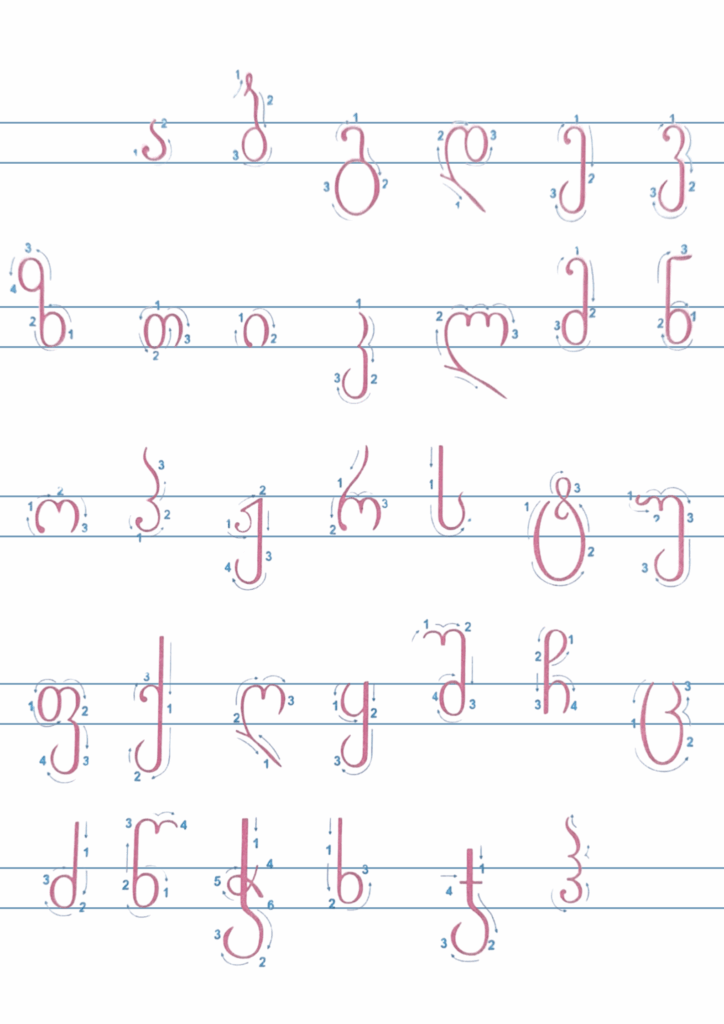
If you want to practice writing:
In our experience it’s enough to write every letter 10 times, then copy a small text. In just 1–2 hours you will know how to write in Georgian. Hint: save the image below with a right click and add it to a note with your other Georgian content.
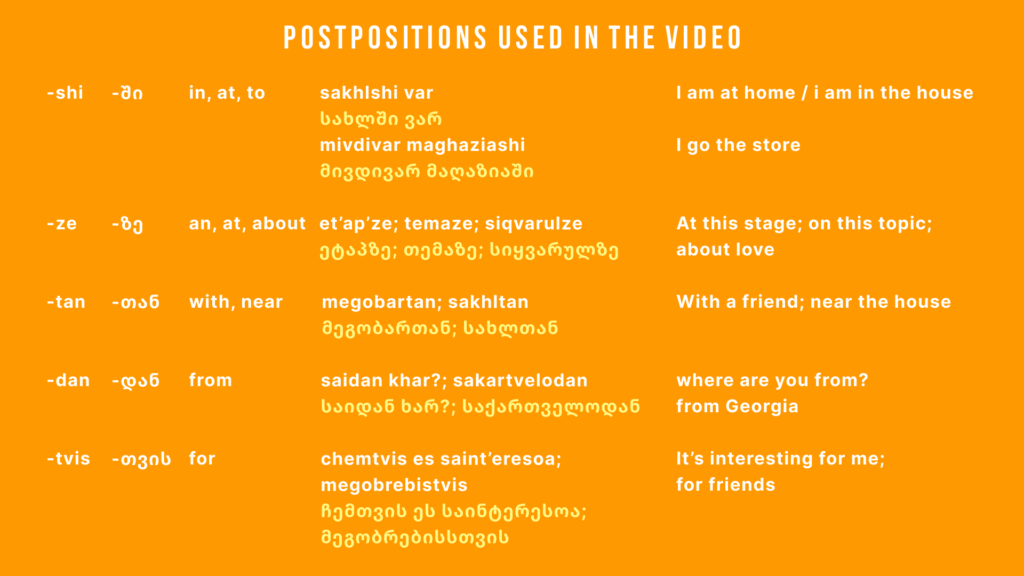
🧑🏫 Intro to verbs and locational suffixes (saying “in, on, with, etc.”)
Let’s touch the most basic grammar concepts.
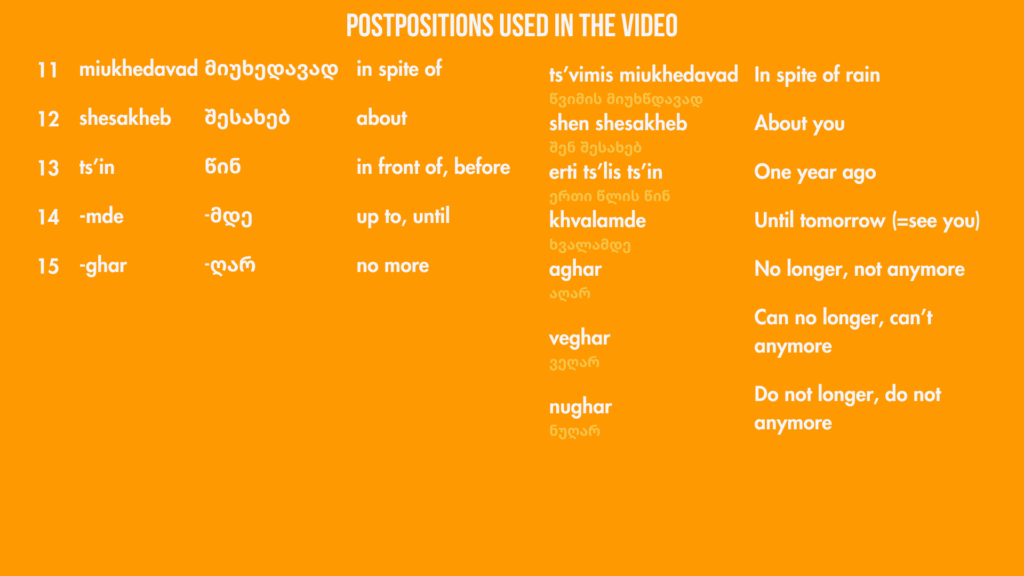
We conjugate one verb, then look at the v- and m- group, and finally talk about postpositions of location.
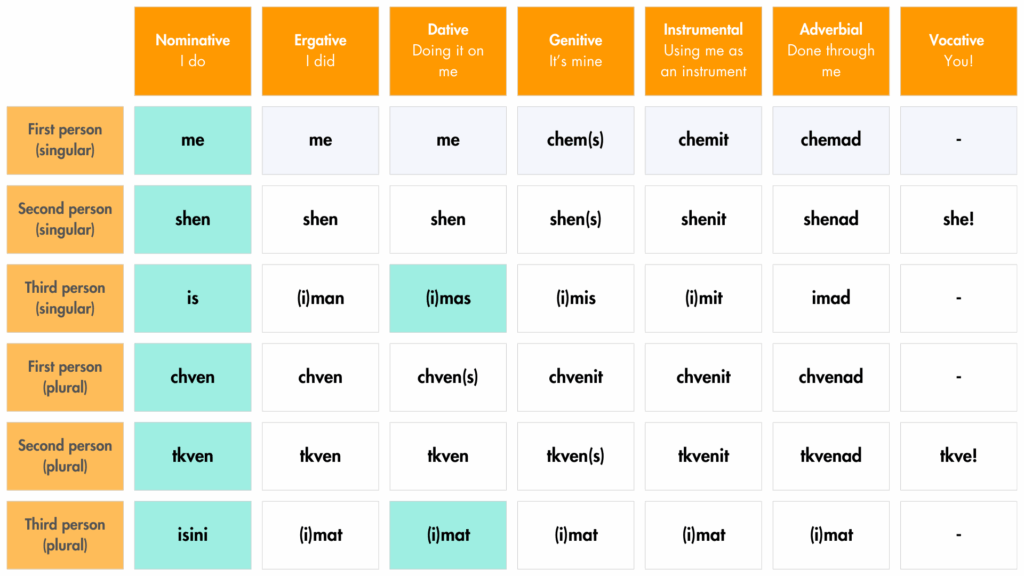
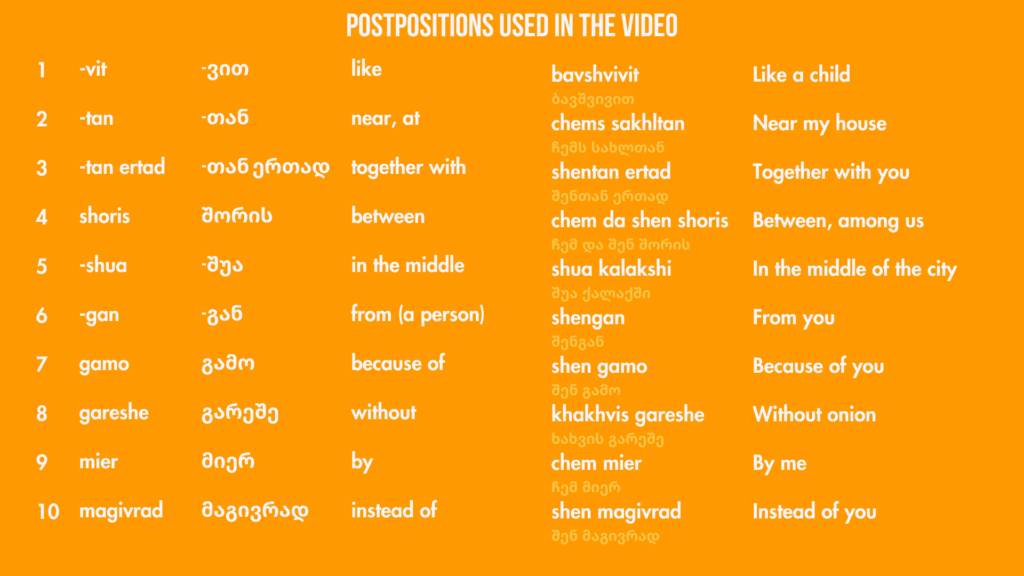
🧑🏫 Pronouns, Conjunctions, and Negations
Pronouns are used to relate to other people.
Conjunctions are mainly used for locations and logical relations.
Both are very useful!
Overview of Pronouns
Overview of Conjunctions
🧑🏫 Morphology — our must-see overview
Georgian is based on roots and morphing rules — that’s how you end up with long words. When you know the patterns, you remember roots and patterns instead of long scary words.
After watching this video, Georgian words become a lot more logical and you can see their beauty. It covers the main concepts in 14 minutes, so feel free to rewatch it later!
🧑🏫 Verb shorts — the complete series (parts 1–4)
We shared these videos for free on our Instagram page, so follow us if you want them to randomly show up. Here we share them all together so you can work through them at your own pace.
With just these short videos, you will learn how the most complex part of Georgian grammar works: the verb system.
Part 1 — History, the verb blocks, tenses, and verb endings
With just a few short videos each week, you will learn how the most complex part of Georgian grammar works: the verb system.
Above is some historic context. 1600 years ago the Georgian script appeared in Georgia, and 60 years later already in Bethlehem! Isn’t that cool?
Introducing the block system in the video above. Thinking of verbs like this will help you understand them.
Let’s introduce each block one-by-one now. The blocks will have a separate video later.
Now we take a look at the tenses in Georgian. There are more, but we selected the 5 most used ones, and explain how they relate to each other.
Now let’s settle this knowledge by going through some examples. We’ll start with the same video next week — it’s just for you to see the different blue blocks in action.
Part 2 — Preverbs, tenses, and the verb root
Let’s take another look at the tenses in Georgian. These are the blue blocks. Preverbs in the beginning, and suffixes at the end. There is a present/future ending. And the aorist past and the optative have a special ending.
What are those preverbs again? And how to remember the correct ones for each verb? Verbs are unique by their root, their verb family (the blue suffix), and their preverb (the blue prefix).
And now our favourite video: the directional preverbs. Learn in 2 minutes what you will need for every verb. This is the most important part — maybe watch this one a few times?
The key here is that the infinitive can also be a noun. P’iri means mouth — you’re giving your word/mouth in Georgian. It’s also the root of promising something.
So yeah, let’s finish with the verb root, which every Georgian verb has. Recognising verb roots is the #1 skill required for Georgian. It’s also what makes verbs irregular, because some verbs change roots between tenses.
Part 3 — Subject markers, object markers, version markers, and the imperfect
How to mark the person doing something? Usually with a Subject Marker, which has the -v- ending for the first person. Don’t hesitate to take a screenshot during the video.
Up next, the Object Markers. They start with -m- for the first person and -g- for the second. Some verbs use the Object Marker to show the acting person — like Spanish’s me gusta.
The next videos continue with verb versions. We can change the meaning and direction of verbs with a Version Marker: reflexive -i-, or -a- and -e- directed at another object.
What if we combine Subjective, Objective, and Version markers? We can have verbs with up to 3 actors/objects! There are some rules about this in the video above.
Let’s look at some examples that will tie it all together. This is how verbs work in the present and future tense, including subject and object markers.
And now a first step towards the past forms, with the simple imperfect, that just adds -di to the present verb — for things that continued for a longer time in the past.
Part 4 — The aorist, irregular verbs, verbs of movement, and the optative
Let’s start with the Aorist, the unspecified or simple past. If a sentence starts with someone’s name ending in -ma, you already know it happened in the Aorist past.
Two ways of creating the past and future — one with preverbs, the other with an -i- which is used for intransitive actions (things that happen by themselves).
What makes verbs irregular? Usually they have different roots in the present, future, and past tense. It has nothing to do with the meaning changing with different preverbs — it’s more like not behaving according to rules.
Let’s look at some irregular examples.
Very important are verbs of movement. You can go rewatch the directional preverbs video to see how to remember them. Here is how to create verbs of movement.
And our last video is about the optative. The optative shows optionality, and you’ll see it most commonly used with minda. This is the most elegant and advanced part of the verb system.
We hope you liked them and that you will recognise the patterns!
🧑🏫 62 Georgian verbs — a PDF to download
As a reward for finishing all the verb shorts: here are 62 Georgian verbs in one pleasant PDF.
🧑🏫 The Cases System
The case system isn’t that complicated — we cover the whole thing in under 12 minutes. You’ll get used to it when practicing phrases or listening to people, but this knowledge helps you recognize cases when you need to. Rewatch if needed
🧑🏫 Official Georgian textbook — Aghmarti / Ascent
This is the standard book used by most teachers. With the practice from this course, you’ll be able to move through it quickly. Ideally pair it with one weekly hour of private lessons — half going through the book, half conversation where your teacher records phrases based on things you tried to say. That way you learn 20–30 new phrases every lesson.
🎧 Guided Listening with Ira
🎧 The original unedited videos
These are the full videos of Ira talking about her life, travels, and design career. It will be too fast, but you’ll get used to sounds and words.
🎧 Your first 30-minute follow-along session
Listening works subconsciously. In this follow-along we repeat sections multiple times and tell you to focus first on English, then Georgian.
Watch this 36 minute version, it tells you what to focus on. Then come back on another day for the second session.
🎧 Your second 30-minute follow-along session
After watching and rewatching, you should understand Ira more and more. It works subconsciously and takes time. Next session, you’ll watch without subtitles and see how much you understand.
Your second time watching and reviewing. Understanding more already? Come back on another day for the third time.
🎧 Your third 30-minute follow-along session
And the third time now. Let’s see how much you understand without subtitles.
Can you follow what she’s speaking about? Can you capture individual words? Is it starting to feel a bit natural to you?
🎧 Background listening and printable PDF
Here is an audio file you can listen to in the background with your phone locked.
🎧 Listening-Reading Interviews (Homemade)
Watch and rewatch these videos with subtitles. Each time you’ll understand more, and reading along helps you recognise words and structures. This will teach you how Georgian natural speech sounds, like nothing else can.
🎧 Mzia from Tskaltubo — a lovely senior with stories from Soviet Georgia
Do the same as with Ira: watch it multiple times, write down words you want to remember, and come back to it in the future. After a few sessions you’ll understand her story with audio alone.
And here’s a wonderful second listening video from Mzia. Get to know someone who worked in a Soviet Sanatorium, and then had a peaceful life afterwards. With some fun facts about post-war Georgia and Georgian “Boomers”.
🎧 Guram from Tskaltubo — an Imeretian accent and stories from his life
Here’s Anzori (nickname Guram) speaking with a strong Imeretian accent. No worries about understanding everything — we marked the standard verb blocks and suffixes in colours so you can recognise directional and temporal patterns. We recommend watching these videos multiple times.
Put the link in a note on your phone. Next time you’re on a bus, review it and build a natural understanding of the language.
And here’s the audio file and PDF if you prefer that.
🎧 Soso — a tin crafter from Kutaisi
Soso is a tin crafter, who lives in Kutaisi. He builds metal structures for houses in old unique styles. A former volleyball player and coach, now a crafter — he talks about when he started, the work he does, and what he likes about it.
🎧 Lucas (1/3) — stories from his life
Let us introduce Lucas to you, who already speaks very fast. Well, that’s how it is with Georgians. Still, it is good practice to listen many times. And after a few times on a few days you can soon understand this fast speaker too.
Good luck and enjoy that you’re able to understand something. Even if it feels like nothing, it is working subconsciously.
🎧 Lucas (2/3) — daily routines
🎧 Lucas (3/3) — traveling and advice for foreigners
Another video of fast-talking Lucas. Watch it multiple times until you can recognise words better. Recognising words in general is pretty difficult and it’s really normal if it’s hard. As long as you’re paying attention, your brain is already learning. Take it easy 🙂
🎧 Chemi Tsolis Dakalebi — a subtitled episode of the famous Georgian show
It kind of resembles Desperate Housewives by the concept, but a bit more Georgian and less desperate. You can find the rest of the episodes here (but without subtitles). You could even write your own transcript of the next episode, with help from Google Translate and running YouTube at 75% of the speed.
🎧 Recommended Georgian YouTube channels
For more native content, here are some channels worth bookmarking and rewatching over time.
- Zmuki podcast — a podcast about the Georgian music scene. Georgian music is a hidden gem of the music world, and this uncovers the stories behind it.
- Giorgi sakartvelodan (George from Georgia) — one of the most interesting Georgian YouTube travellers. Thoughtful conversations and perspectives most travellers miss.
- Soso msoplios irgvliv (Soso around the world) — the most popular Georgian YouTube traveller, with vlogs from Svaneti, Racha, North Korea, Africa, and more.
- Kuchebi ar ivits’q’eben (Streets won’t forget) — a podcast series about football teams and their unforgettable seasons. Fun and nostalgic even if you’re not a football fan.
🎧 Listening with YouTube documentaries
We have selected enjoyable documentaries and reportage channels. Watch them, listen to the language, and build a natural intuition. Some polyglots swear by this method — 30 minutes a day builds working proficiency.
TV IMEDI (1.15m subs)
TV IMEDI (view channel) – ტელეკომპანია “იმედი” 2001 წელს დაარსდა და მაუწყებლობს 2003 წლის 15 მარტიდან. დღეისათვის “იმედი” საქართველოს სატელევიზიო სივრცის ლიდერად ჩამოყალიბდა და მაყურებლის ნდობითა და დიდი ინტერესით სარგებლობს .
- ჩემი საქართველო – ზესტაფონი (> 19k views)
- ჩემი საქართველო – შიდა ქართლი (> 4k views)
- რეჟიმის ანატომია I ნაცრეჟიმი 14 წლის ბავშვის გასანადგურებლად (> 12k views)
- რეჟიმის ანატომია I რამაზ ღვალაძის წამება, სისხლიანი „ყინწვისის საქმე” I ეპიზოდი #11 (> 3k views)
- არჩევნები სომხეთში დაკავებების ფონზე (> 12k views)
- თაღლითობის მასშტაბური სქემა (> 3k views)
- „პრორუსი“ – ტერორი გაცვეთილი იარლიყებით (> 3k views)
- ბაქო-თბილისი-ყარსის სარკინიგზო ხაზის გახსნის ოფიციალური ცერემონია (> 2k views)
- შემდეგი გაჩერება – აკაკი მინდიაშვილი (> 2k views)
- სხვა რაკურსი – 4 ივნისი, 2026 წელი (> 7k views)
მთავარი არხი • Mtavari Arkhi (336k subs)
მთავარი არხი • Mtavari Arkhi (view channel) – ჩვენთან ერთად მოიპოვეთ თავისუფლება !
- ლეგენდა პუტინზე – კასპელი ნაბიჭვრის ამბავი | ვაშა გადაცემა! [ეპიზოდი #20] (> 69k views)
- მოსკოვის საპატრიარქოს გეი-ჯაშუშური სკანდალი – ილია მეორის ყოფილი იპოდიაკვნის ისტორია (> 27k views)
- “კავკასიის ლეგიონი” უკრაინაში რუსეთის წინააღმდეგ – ინტერვიუ ჩეჩენ საველე მეთაურთან | ვაშა გადაცემა! (> 22k views)
- ამოტივტივდა თუ არა ივანაშვილის გვარი იარაღით ვაჭრობის საქმის FBI-ს გამოძიებაში | ვაშა გადაცემა (> 27k views)
- ვისთვის მუშაობს საქართველოს სანაპირო დაცვა? | ვაშა გადაცემა! [ეპიზოდი #98] (> 12k views)
- საქართველო – კონტინენტის რეკორდსმენი უმუშევრობის სტატისტიკით | ვაშა გადაცემა! [ეპიზოდი #96] (> 10k views)
- როგორ უქმნიდა ანგელა მერკელი არმიას ვლადიმერ პუტინს – “შპიგელის” გამოძიება | ვაშა გადაცემა! (> 14k views)
- ქართველი პუტინისტები – კალაძის საოჯახო კავშირები და ფსბ | ვაშა გადაცემა! [ეპიზოდი #31] (> 13k views)
- მილიონერი ქოცების ქრონიკები – ოქროს კოშკებიდან ოქროს პისტოლეტებამდე | ვაშა გადაცემა! (> 19k views)
- ვანოს შოუ | სტუმარი გიორგი მარგველაშვილი (> 10k views)
Formula News (163k subs)
Formula News (view channel) – გაიგე ყველა მნიშვნელოვანი ამბავი პირველმა!
- ფორმულას სპეციალური გამოშვება — 26 მაისი (> 31k views)
- ელისო კილაძის საქმე (> 27k views)
- „მე ჩამოყალიბებულ მკვლელებს წავაწყდი, ისინი მშობლებმა ჩამოაყალიბეს ასეთებად“ ეკა კუპატაძე (> 19k views)
- არჩევნები სომხეთში | ვახო სანაიას ჩართვა ერევნიდან (> 16k views)
- ხვიჩა კვარაცხელიას ევროპული ტრიუმფი, ქართული ფეხბურთის მომავალი – ინტერვიუ ბიძინა ბარათაშვილთან (> 8k views)
- გორში პოლიციელების მიერ ნაწამები მოქალაქე დააკავეს (> 11k views)
- რას ეუბნება ვაშინგტონი „ქართულ ოცნებას“ და ოპოზიციას? — გია ჯაფარიძის და ლელა ჯეჯელავას ანალიზი (> 9k views)
- ინტერვიუ ლევან სანიკიძესთან (> 8k views)
- გიორგი თარგამაძის ფორმულა — 1 ივნისი, ნაწილი I (> 6k views)
- ფორმულა 12:00 საათზე — 1 ივნისი (> 7k views)
ტვ პირველი • TV Pirveli ⭕ LIVE (146k subs)
ტვ პირველი • TV Pirveli ⭕ LIVE (view channel) – ტელეკომპანია პირველი საერთო მაუწყებლის ლიცენზიის მქონე მზარდი ქართული არხია, რომლის ეთერში პოლიტიკურ თოქ-შოუებს ინგა გრიგოლია და ეკა მიშველაძე გთავაზობენ. საგამოძიებო რეპორტაჟებს ნოდარ მელაძის გუნდი წარმოგიდგენთ. დღის მთავარ ამბებს დიანა ტრაპაიძე, ანა ახალაია და რუსუდან დუმბაძე გიყვებიან. ყველა საინტერესო სტუმარი, განსხვავებული შეფასებები, რეპორტაჟები ყველაზე აქტუალურ საკითხებზე – საინფორმაციო გამოშვება დღის ამბებში. შაბათ-კვირას წარმოგიდგენთ გასართობ პროგრამას “შუადღე LIVE”. არხზე არის ბიზნეს გ
- საქართველოს დამოუკიდებლობის დღე | პირველები 11 საათზე 26/05/2026 (> 7k views)
- გვაქვს მასალები რომელიც იქნება ნემსის ჩხველეტა რეჟიმისთვის შიგ გულში I ირაკლი შაიშმელაშვილი (> 26k views)
- “გვყავს ხელისუფლება რომელიც რეაგირებს მხოლოდ ძალაზე” | გია ხუხაშვილი (> 12k views)
- ფინანსური რესურსი მახრჩობელა პუტინიჩმა გამოაცალა ოპოზიციას, არასამთავრობო სექტორს და საზოგადოებას (> 17k views)
- პირველების ცენტრალური გამოშვება ⭕ 🅻🅸🆅🅴 26/05/2026 (> 19k views)
Gaagrdzele Istoria (13k subs)
Gaagrdzele Istoria (view channel) – გააგრძელე საქართველოს ისტორია
- თემურ ლენგი – I სერია – გააგრძელე საქართველოს ისტორია (> 303k views)
- ერეკლე II-ს ეპოქა – I სერია – გააგრძელე საქართველოს ისტორია (> 122k views)
- კონსტანტინეპოლის დაცემა – I სერია – გააგრძელე საქართველოს ისტორია (> 174k views)
- ერეკლე II-ს ეპოქა – V სერია – გააგრძელე საქართველოს ისტორია (> 190k views)
- ucnobi jariskacebi 2008 UNKNOWN SOLDIERS 08.08.08. (> 24k views)
Toma Chagelishvili (94k subs)
Toma Chagelishvili (view channel) – თომა ჩაგელიშვილის უნიკალური დოკუმენტური ფილმები და რეპორტაჟები საქართველოს ისტორიას განსხვავებულად გვიყვება
- კავკასიური ნაგაზი მგლის წინააღმდეგ. თომა ჩაგელიშვილი. Caucasian sheep-dog vs wolf (> 3.64m views)
- საუკუნის ძარცვა (> 446k views)
- ცხოვრება 5300 წლის წინ საქართველოში | Жизнь в Грузии 5300 лет назад | Life in Georgia 5300 years ago (> 176k views)
- სიკვდილით დასჯა საქართველოში | Death Penalty in Georgia (> 174k views)
- მარტოხელა ქართველი ტერორისტი – The Lonely Georgian Terrorist (> 111k views)
- როგორ კლავდნენ ქართველები ნიკიტა ხრუშჩოვს და 1956 წლის სისხლიანი 9 მარტი | Khrushchov must die (> 106k views)
- დაკარგული ფოტოების ამბავი | Das Vermächtnis der vergessenen Fotos | The History of the Lost Photos (> 11k views)
- 1924 წლის ანტიბოლშევიკური აჯანყება – The 1924 Anti-Bolshevik Uprising (> 115k views)
Vasil Gabunia’s Channel – Exploring Together (87k subs)
Vasil Gabunia’s Channel – Exploring Together (view channel) – არხის დევიზი: „მე არა მხოლოდ გიყვებით ისტორიებს, არამედ გიწვევთ მათ ერთობლივ კვლევაში.“
- არქტიკისა და ტროპიკების შეჯახება ჩრდ.ამერიკის თავზე.როგორია ცხოვრება კლიმატის დესტაბილიზაციის ერაში? (> 61k views)
- SUBT! შავი ზღვის შხამიანი ცხოველები!!! Ядовитые жывотные Черного Моря! Danger – Black Sea! (> 12k views)
- SUBTITLES! ასხის მთის ლეგენდარული სულგუნი The legendary Sulguni (Georgian cheese) from Mount Askhi (> 11k views)
- SUBTITLES! სტუმრად თუშ მწყემსებთან Visiting Tushetian Shepherd’s 2002 (> 10k views)
- SUBTITELS! აშტოობის დღესასწსაული დანოში (თუშეთი) 2001 წელი Fest in Dano (Tusheti, Georgia) 2001 (> 10k views)
- WITH SUBTITLES! წყალდიდობა მღვიმეში flood in a cave Überschwemmung in einer Höhle потоп у печері (> 1k views)
- ვულკან ეტნაზე ასვლა 17.10.2022 Etna Summit Trekking 3329m, 4K, with SUBTITLES! (> 1k views)
🎧 Listening with weird popular YouTube videos
It’s like zapping TV through another linguistic and cultural universe. Watch what native speakers watch. We hope you find something interesting.
- ბულინგიდან ბარიატრიამდე | ეს ისტორია არავისთან მომიყოლია (> 76k views) – channel: Channel LC (> 127k subs)
- ვასრულებ ბავშვების ოცნებებს 24 საათი (> 122k views) – channel: The Zipper (> 251k subs)
- ვინ დაიკლებს მეტს მდიდარი vs ღარიბი @QIMERAYT (> 29k views) – channel: RB • Khidesha (> 55k subs)
- ყველაზე დიდი დამალობანა საქართველოში | RIGHT GUYS vs გამომწერები (> 176k views) – channel: Right Guys (> 72k subs)
- “ჩვენც გევიმართებით” | სეზონი 8 | სერია 2 | კეთილები | @Ketilebi2 (> 407k views) – channel: კეთილები (> 358k subs)
- ვჭამთ ერთმანეთის გამოძახებულ საჭმელებს (> 90k views) – channel: ოქტოპუსი / Octopus (> 253k subs)
- USAშველოები 2 | სერია 3 – სეზონი 2 | Episode 3 – Season 2 (> 572k views) – channel: USAshveloebi (> 188k subs)
- ვიმეორებ მსოფლიო ჩემპიონატის გოლებს (> 63k views) – channel: RABAN (> 116k subs)
- ცინკვესები/თამადა (> 73k views) – channel: MISHA TSINTSADZE (> 115k subs)
- მოგზაურობა 24 საათით – იტალია VS საქართველო (> 205k views) – channel: Hungryman – ჰანგრიმენი (> 585k subs)
- მივდივარ ყველაზე მაღალ კაცთან მსოფლიოში (> 279k views) – channel: კაკო / Kako (> 363k subs)
- უზბეკური კერძების დეგუსტაცია (ჩუჩუკი, ჩობანი და სამეფო ფლავი) (> 90k views) – channel: საეჭვო კაცი (> 325k subs)
- UFC Freedom 250 : თოფურია VS გეიჯი – სრული ბრძოლა (> 316k views) – channel: Setanta Sports UFC (> 352k subs)
- უტდ – Xiaomi YU7 MAX – ჩინეთის პასუხი Ferrari – ს (> 114k views) – channel: George Sarishvili (> 348k subs)
- სარკასტიკა – ნანიკო ხაზარაძე | ეპიზოდი 25 (> 129k views) – channel: სარკასტიკა • sarkastika (> 65k subs)
- ტახი მახო რუსთავში – სერია 9 | სეზონი 4 (> 162k views) – channel: Comedy Group | კომედი ჯგუფი (> 799k subs)
- უსერიოზულესი ჩხუბები გამაში – მოკლე მავანური მიმოხილვა (> 82k views) – channel: Mavani (> 113k subs)
- “საქართველოს ხმა”-მესამე შესარჩევი ტური–2026.06.16 (> 21k views) – channel: rustavi2 (> 370k subs)
- რა დევს ყუთში? 📦 რა ღირს? 💰დანიელას 3 ეტაპიანი გამოცდა!🦸♀️ (> 58k views) – channel: Dani TV (> 392k subs)
- ტორპედო – დინამო ბათუმი (> 20k views) – channel: Crystalbet ეროვნული ლიგა (> 67k subs)
🧑🏫 Book Lessons with Recommended Teachers
The most effective way to continue is with private lessons using our app. After 10 lessons with 30 new phrases each, you’ll have 300 more phrases — enough for basic conversations and expressing yourself with native speakers.
We have a network of teachers who work with our app. Ask us on WhatsApp, email team@lingophant.com, or text us on Instagram @lingophant_geo and we’ll connect you to a suitable teacher.
You can also find your own teacher, or ask a friend for 45 minutes each week. Explain to them how to help you with this link: https://lingophant.com/for-teachers/
Also, join our WhatsApp group to benefit from reminders and speaking sessions a few times a week.
🎬 Bonus: Recommended Georgian movies with subtitles
Sadly, there are barely any movies with official Georgian subtitles. We have selected movies where at least English subtitles are available. Still enjoyable — and you can connect sounds and meanings! In general, we can recommend a subscription to Cavea Plus. You might need a VPN if you live abroad.
- Monanieba / Repentance (1987) — YouTube | RareFilmm | Censored by Soviet authorities, then released. A despotic mayor dies and his body is repeatedly unearthed and buried again.
- Pirosmani (1969) — YouTube | The story of self-taught Georgian painter Niko Pirosmani.
- Grdzeli nateli dgheebi / In Bloom (2013) — Cavea+ | Two teenage girls in early 90s Tbilisi, amid the collapse of the Soviet Union.
- Mandarinebi / Tangerines (2013) — Apple TV | Oscar-nominated. An Estonian farmer shelters two enemy soldiers who each vow to kill the other.
- Chemi bednieri ojakhi / My Happy Family (2017) — Netflix | A middle-aged woman decides to leave her family, challenging social expectations in modern Georgia.
- Da chven vitsek’vet / And Then We Danced (2019) — Cavea+ | A passionate story of love and liberation set in Georgian dance culture.
- Meotkhe brait’oni / Brighton 4th (2021) — Amazon Prime | A Georgian wrestler travels to Brooklyn to help his son pay off a gambling debt.